


🐇 Rabbit hole 🕳️ Indiana Stones 🪨 great escapes🏃Roman concrete 🏛️ Playboi Farti📝
🍭 👂Well he’s dead now so the story is gone 🌈 🤸♀️

Bonjour.
Today is Monday, February 24, 2025. My next Disney Cruise is in 25 days. If this newsletter is too long, here’s a wild bet that could make or break a loving family, I finally found an episode of a BELOVED podcast I have never understood that I completely fall head over heels for, here’s a new scam podcast that got wayyyy darker and more philosophical than I thought it would.
xoxo
lauren
P.S - If you’re interested in placing an ad in Podcast The Newsletter or Podcast Marketing Magic, fill out this form
👋q & a & q & a & q & a👋
Mark Steadman
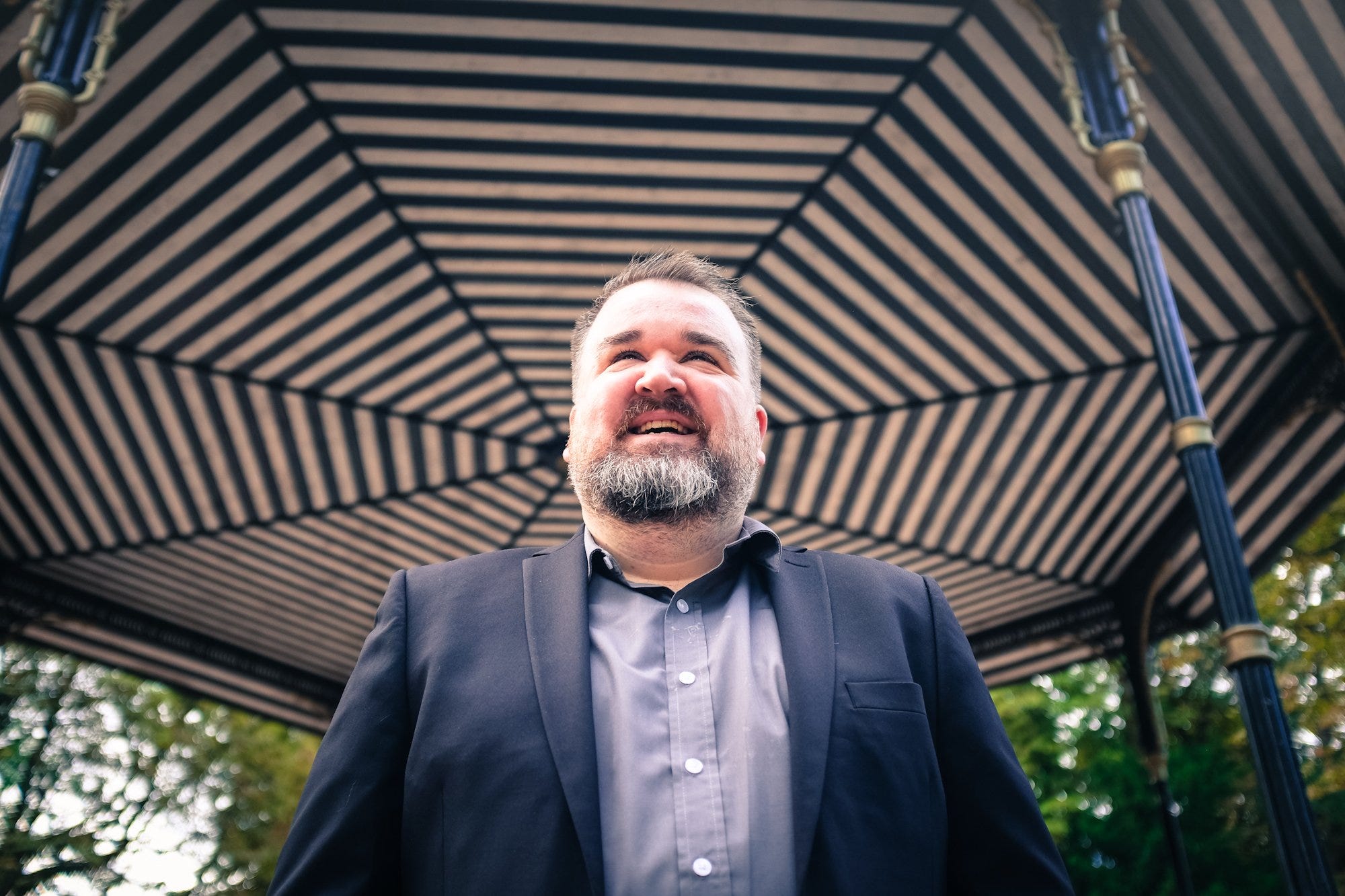
Mark Steadman (he/him) is from Birmingham, in the middle of the United Kingdom. He’s been making podcasts and on-demand audio since 2004, but was perhaps better known for founding the media hosting company Podiant. He also helmed the cult favourite Beware of the Leopard, a podcast about the Hitchhiker’s Guide to the Galaxy that received special recognition by the BBC in 2020.
Congrats on making your 30th podcast! I got that right…30?!
That’s about right. Honestly there’s probably one or two I’m forgetting about. Some, like my Hitchhiker’s show, spanned 6 years, others only made it to episode one.
How have you changed as a podcaster since the first one in 2008?
I’m not as embarrassed by the things I say anymore. I’ve plenty of compassion for 2008-Mark, but he was trying way too hard to be like the people he admired on radio and in the burgeoning podcast scene at the time.
The danger there is you end up aping a style, but it comes off empty because it’s filled with hot air. I’ve spent the subsequent years growing into someone I enjoy hearing on-mic, rather than cringe away from. There’s a distinct flavour there that might not be for everyone, but at least it’s a flavour I like. Some people find it quickly – for me it’s taken nearly two decades.
What’s the podcast in your catalogue that you think had the best shot of making it big but hasn’t (yet?)
List Envy remains a source of (a little) frustration to me. I’ve come back to it twice, and if I had a team doing the admin, editing, and promo, I’d probably do it week in, week out.
I think it’s a good format, and my guests have always enjoyed it. It’s a pure entertainment show and the people who get it really like it, but it’s never spread organically, and I’ve lacked the energy to do the necessary promo legwork.
Part of what makes the show difficult to sell is that every episode is about something entirely different, so with me being the through-line, you have to buy into my whole shtick and be the sort of person who’s a little bit curious about a lot of things.
Tell us about the new podcast, Undo.
I’ve heard musicians say that every new album should be their favourite, or at least show the culmination of the things they’ve learned over the years.
From a pure craft perspective, Undo is my most mature work. Each episode is a TED talk length investigation into a time management hack, myth, or method throughout history. That means writing 2,000+ words, adding music and sound design, and doing my best to mix entertainment with stuff you can practically apply, or assess to figure out whether it works for you or not.
The desired end result is something with the easy flow of the Allusionist or Twenty Thousand Hertz, from someone who reads the productivity books so you don’t have to.
I’ve long been fascinated by how we can optimise our days, reduce duplication and unnecessary repetition, and maximise the time we have to do the stuff we want. I’m not interested in hustle culture or the toxic “I’ll sleep when I’m dead” mentality you see in some corners. I think we should all be doing less work for big systems, and more work on the stuff that feeds our hearts and the hearts of others. My goal as a technologist was to help creative people go up against monoliths and win. That’s still my goal as a writer and podcaster.
I think there’s a lot of BS in productivity circles from people who have teams of virtual assistants and personal staff. Those “gurus” are insulated from the messy realities of life, so the best-selling systems they design don’t stand up to much scrutiny.
I want Undo to help listeners make their own assessment about what works and what doesn’t, so they can build their own productivity method that tightly fills the corners in their particular, peculiar life.
Plus, it’s brimming with effervescent charm and cool, and if you listen to it, you will become instantly sexier and more attractive to your preferred flavour of human.
What’s a podcast you love that not enough people know about?
Pappy’s Flatshare isn’t hugely obscure but it’s probably under-listened-to. Every month they do a live show which is warm and off-the-rails funny, and every other week they hang out and try to make each-other laugh. They’ve been doing some form of this since around 2010 I think.
Since that’s three white-guy comedians, let me balance it out with a new discovery for me in 2025: Sentimental Garbage, which explores pop culture often dismissed because it’s “stuff girls like”.
🚨If u only have time for 1 thing🚨

Yesterday Embedded ran a 3-part series, “Alternate Realities,” about a bet between reporter Zach Mack and his father, both of them believing it would settle once and for all who was right about which of them been lost to conspiracy theories. Both men felt they were pulling the other out of very different rabbit holes. Zach’s father had started to believe in chemtrails, that the government controls the weather, that ANTIFA staged January 6, that a cabal called the globalists is controlling the world. Zach…did not believe those things. In early 2024 the two agreed: Zach’s dad made a list of 10 prophesies (on the list: a bunch of democrats would be convicted of treason and/or murder, the US would come under marshal law…) he was 100% sure would happen, and by January 1, 2025, Zach would have to give his father $1,000 for every one that did. For every one that didn’t, Zach would get $1K. I had talked to Zach a little about this before I listened so I was prepared, and I received a press release so I knew it would be about polarization and conspiracy theories. But I was struck by what a beautiful and dark family story this is, about coming to grips with our own mortality. This was one of the most heart-wrenching and beautiful pieces I’ve listened to in a long time. Zach and his dad are doing this because they love each other. They are open about how different their realities are, both wondering if a family can survive. The whole family is wondering that. Zach’s mom might have to leave her husband. She doesn’t want to be alone but asks “what kind of life do I have now?” Zach’s sister is gay, something her dad doesn’t approve of, and she believes this bet might be the make-or-break thing for their relationship. This bet is the make-or-break thing for the family. They all want this deadline, they all want this to end. This is a loving family, you can tell. Maybe that’s why I was so moved. What will this bet do to them? Zach’s dad has to forfeit his beliefs or his wife and kids. As the story progresses we learn that Zach’s grandfather may or may not have died of stubbornness, and he wonders how he can break the cycle. The stakes are high, like so high, everything is painfully vulnerable, and you really cannot miss the ending.
notes
✨Sign up for my Marketing 101 Radio Bootcamp here. I’m switching up the format a bit to be more individualized for all who attend!
✨I’m speaking at Podcast Movement Evolutions next month and am so excited! Come find me!

✨I have noticed and huge and sudden uptick in hearing dynamically inserted ads inserted mid-sentence. Anyone else?
✨Arielle spotlighted We Came To The Forest in EarBuds.
💎podcasts i texted to friends💎

🎙️Scam Factory tells the story of a network of people tangled up in one of those compounds in Myanmar that lures people inside with promises of high salaries and then literally enslaves them making it nearly, so nearly impossible to get out. The main focus is a character they call “Charlie,” the sister of Max, a guy who got suckered in, and her insane and unethical attempt to get him out. (Spoiler alert…she ends up having to get multiple members of her family out who follow Max in, trying to get him out.) In order to get Max and co. out, she has to play the game and become part of the scam factory herself, luring strangers into the factory for the sake of her family. It’s like an MLM of death. The closer she gets to freeing Max, the deeper she is in herself. She has to keep asking herself, “what’s safer?…to go in a little deeper, or to get out now?” It becomes a very scary and philosophical question. At the beginning of Scam Factory I couldn’t figure out why there was so much minute focus on Charlie. But this is all about Charlie. She is the gear churning the factory, Max is a pawn. All to say this story was more interesting than I thought it would be. It’s cinematic, really. And if you’ve ever wondered “no really, how does this happen to someone?” This shows you. Scam Factory doesn’t have great writing or audio elements but it is a wild story I blew through. Stay for the ending because it’s exciting and will give you a lot to think about. Like, how can Charlie live with herself, can she ever be forgiven? I often wonder why scam podcast are so popular. If people listen to true crime in order to protect themselves from being murdered, are they listening to scam podcasts in order to protect themselves from being scammed? Do people in MLMs listen to scam podcasts? Or are scam podcasts like fitness magazines in the 90s that were all the same every month with recipes and workouts that promised to change people’s lives, that everyone just read every month without changing anything? Does it sound like I’ve lost my mind? To be completely honest those last 4 questions were shower thoughts I had when I accidentally forgot to turn on a podcast in the shower. That’s what happens when. I’m alone with my thoughts for better or worse. Listen here.
How I discovered it: Press release.
🎙️Sold a Story, an exposé of how educators came to believe in the complete wrong way of teaching children how to read, kind of broke not just podcasts / the internet, but the nation. It didn’t just report a problem—it fueled a movement that is actively reshaping literacy education. Schools are reevaluating and straight up abandoning widely used programs, laws are being passed requiring teachers to use evidence-based reading strategies. So if you’re not caught up, do it now. Three more episodes coming up. For the first, Emily Hanford takes us to Steubenville, OH, a really poor town that you’d think would leave kids behind in school. But in Steubenville, the kids are good readers by the time they finish third grade. Zero kids in the middle school were behind in reading. And they weren’t just learning, they were excited to come to school—the school system has the lowest absenteeism in state. That’s surprising—lots of the kids come from single or zero parent homes, lots of them are homeless and live in shelters. Aren’t you fucking curious right now about what the heck is going on? It’s a very different approach. First of all, they don’t do a letter-first approach, but a sounds-first one. In first grade they do something called “cooperative learning” which puts kids in small groups so they can get lots of practice reading, instead of just being lectured at. Every teacher in the school, even the gym teacher, teaches reading. So class sizes are tiny and the kids can be grouped together with a few others at their exact level, no matter the grade. Because oh yeah! The entire school has reading class at the same time. Some of what Steubenville is doing is controversial, but it’s working for them. I don’t know how they are getting away with this, how they developed it, there are questions I want answers to. We could spend a season in Steubenville. Listen here.
How I discovered it: Conversation with APM.
🎙️Ever since Ira Glass recommended The Blindboy Podcast on some panel or event, I hear people in podcasting rave about it. Hanna Rosin recommended it when I interviewed her. I see people rave about it on Reddit. People rave about it to me IRL. (Having someone rave about almost any podcast IRL is one of my favorite experiences.) I tried so hard and so many times to like this podcast and I always felt like I was bored or missing something. I even told Arielle that I thought Blindboy was gaslighting us all. I know! I’m a terrible person! I told you all to listen to The Telepathy Tapes!!! Why do I have any cred at all? Why are you reading this right now???! Anyway I tapped the episode “A riveting, one hundred and twenty minute conversation with a man who lifts old” for some reason and I don’t know if I’m getting old or depressed or if the world is just getting so terrible, or if this episode was the only one I’ll ever love, but I believe I am a changed man. Blindboy talks to David Keoghan (_indiana_stones_ on Instagram,) who practices the ancient Irish tradition of stone lifting, something that was almost completely eliminated by Ireland’s famine in the 1840s. He’s not just lifting stones. He goes to small villages to find the old people who can remember where their old legendary town stone might have been buried, he digs for them, and when he finds one, he lifts it with extreme care, being possibly the first person to lift it for centuries. Please read that sentence over again and think about all that means. He’s talking to old people, hearing stories, learning history and geography, learning about the land, climate, and culture, archeology and folklore. It’s performance art. At the beginning of this conversation, Blindboy says, “this episode is two hours long, listen to it thirty minutes at a time,” which I thought was very kind advice and I assumed I’d do that. I did not, I could not stop listening. Blindboy pops in with history and facts that are complete tangents—the biodiversity of apples, why there is an “r” in February, why rice-growing cultures are more collectivistic…but it all feels perfectly poetic. (“I love the way your brain works!” Indiana Stones says at one point. “Welcome to being autistic!” Blindboy says.) So yes, two hours of listening, and I could write much much more. There are pockets of surprising moments and stories, and you guys, I get it, I was wrong before—I felt loved listening to this. Somehow. Blindboy’s arms are a safe place to fall into. For this episode, at least!!!! I’m not promising anything. I’ll try again soon. (Would loooooOOoove to know what you think of The Blindboy Podcast.) Listen here.
How I discovered it: I have subscribed out of curiosity.
🎙️Say Their Name, the powerful podcast about the assault and killing of people by police, returned for season three with an interview with Dr. Reynaldo Evangelista, a Black police officer with an interesting background. He grew up Catholic and wanting to be a priest, has studied police ethics and theology. So he’s the perfect person to answer the question: can a police officer even be, like, ethical lol? If we are going to listen to a cop let’s go with this one. He and Adell Coleman break down a few scenarios, like getting pulled over, getting to the bottom of how to survive. When the flashing lights come on, what should you do, before the cops even pull you over? I have been thinking a lot lately about how important it is to know our rights, they’ve been in such danger lately. So what are they? Do we have the right to remain silent? Do we have the right to be searched? This was truly valuable piece information. (Dr. Reynaldo says if you get pulled over you should call 911 and request the presence of a supervisor.) My dream would be to hear people who have been violated respond to this, because I think a lot of what Dr. Reynaldo says is very pie in the sky. I don’t think it’s easy to be an ethical law enforcer. I don’t think that if you follow Dr. Reynaldo’s advice you are absolutely going to make it out alive. He has to know that, right? This is only the beginning of the series, Dr. Reynaldo is back next week and Adell will also speak to an attorney. I know this because I emailed Adell after this episode saying “tell me there is moreeeeee!” Listen here.
How I discovered it: Conversation with Adell.
🎙️If you’re among one of the many people swept away by the batshit crazy story of Kaitlyn’s Baby, might I interest you in Baby Broker, which tells the story of Tara Lee, a woman who told more than 100 couples across the country that she could help them adopt a baby but was lying the whole time??? Peter McDonnell is talking to some of the couples who were impacted, we hear their insane stories, which are all pretty unique (that Tara sure was creative!) and often cross paths. But man, after going through the adoption process myself this stuff hit me hard and I’m happy more people can learn about what it’s like. People who adopt, like the doulas in Kaitlin’s Baby, are putting themselves in really vulnerable positions. When I knew I was matched with a baby but I hadn’t held her in my arms yet, between that time, I could have been knocked over by a feather and probably would have broken to smithereens. It’s not just losing money, it’s not just being lied to, it’s not just not having the baby you thought you would, it’s also completely derailing the entire life you had been planning for, timing wise. When I went to meet my daughter for the first time I knew there was a chance I would return home with an empty car seat and that would have been rough. But I wouldn’t have to start the adoption process all over from a place of extreme trauma. And this is such a unique and fucked up kind of trauma, I don’t know how anyone finds the tools to cope. This is a pretty straight-forward podcast, it’s well done but there isn’t anything surprising about the sound or format. It’s part of The Binge, I imagine people are blowing through it. But I am listening extra closely and I hope other people are, too. Listen here.
How I discovered it: Press release.
🎙️On The Dork Forest, comedian Jackie Kashian interviews people about things that interest them, a podcast topic so open and sweeping that only a really strong host could pull it off—we need to come in because we love Jackie. And I do. But I also never miss an episode of something with Guy Branun, so his Dork Forest episode about the Byzantine Empire was a double doozie for me. Guy is equal parts funny and brilliant, it is really unfair how much so. His ability to explain history is where a) he shines and b) I can see why he would have made a great lawyer, but thank god he didn’t go through with that. From what I know about Guy it was a close call. Somehow, in an hour, Guy goes through the beginning of the Byzantine Empire to its destruction, connecting the dots, and at first I thought he was only connecting the funny dots. I was listening thinking, “how is he going from Greek Fire (we still don’t know what this was???) to horses in heat and I’m still understanding how Constantinople fell put an end to a 1,000 year-old empire?” I would assume in order to tell all the funny parts of history you’d have to skip over important stuff that was very very boring. But that is because I had one or two terrible history teachers. (MISTER HAAS, YOU’RE ON BLAST.) A good teacher can do this. This was a fun, fact-filled*** snapshot of history with Guy as your guide. I love people who can get this excited about something like the Roman concrete. I want that for all of us. ***Did you know The name Istanbul comes from the Greek phrase meaning "to the city,” meaning people were just like “I’m going to the city?” I am typing this here NOW so I do not forget to use it for Arielle’s 2025 podcast fun fact roundup. (Here’s the one from 2024.) Listen here.
How I discovered it: Longtime subscriber.
🎙️On FilmNation’s Greatest Escapes, Arturo Castro (Broad City, Narcos) is telling stories of history’s greatest escapes to guests who don’t know anything about them. (It’s the You’re Wrong About model.) Arturo is charming and the stories are interesting, but what makes this show stand out is the production level, which is not just high but innovative. There are lots of fun audio elements sprinkled in—the sound designer was actually in the recordings making sound effects live, you can hear Arturo and his guest react to them. I think that’s pretty unique. The producers, Carl, Ben, and Tory, are part of the show. (Arturo calls them the “overlords” and they are part of an ongoing bit about him being forced to do the show.) Every episode feels like a party bursting with funny interaction. I listened to everything available, my favorite was the one with Joseph Gordon-Levitt, who kept on bringing things back to the prison industrial complex and other serious topics, which was not the vibe but I was really getting a kick out of it. Also it’s Joseph Gordon-Levitt! Go off, king. The Diane Guerrero episode was perfect because the host/guest chemistry was so good, it felt like I was listening in on two very old friends. Listen here.
How I discovered it: Conversation with FilmNation
🎙️I have listened to tons of podcast episodes about AI and ChatGPT that offer the same kind of dour reflection on what it’s doing to society, art, whatever. The Playboi Farti episode of Search Engine made me think about it in basically three completely, completely different ways. PJ talks to Emily Weinstein of the Center for Digital Thriving, who is researching Gen Z about AI in a nonjudgemental way to be honest about it. (It’s very “you can drink in the basement as long as it’s at my house and I know where you are.”) What she discovers is that the way Gen Z thinks about AI is so fundamentally different than the way, say, I do, that I’m not sure there can be a bridge long enough to close the gap. It’s a philosophical difference that I didn’t realize existed. PJ talks to a veteran writing teacher about education and writing who believe the fact that kids using AI exposes just how bad and boring assignments can be. Maybe curriculums need to be better. How do we get kids to sit down with a blank page if they don’t have to anymore? Is it even possible? Finally, we are freaking out about AI but maybe we need to worry about things lurking beneath the AI, things that drive us to use it. This conversation made me feel something I already felt about AI, bad, but bad in new and more ways. Listen here.
How I discovered it: Subscriber
🎙️On Attach Your Résumé, Eric Silver and Amanda McLoughlin interview online creators about how their jobs work and how they got there. Together these conversations offer a good snapshot of the digital media landscape, and readers of this newsletter will recognize a lot of the guests—Yowei Shaw, Akilah Hughes, Ryan Broderick, Lauren Shippen. Eric and Amanda, along with their producer Brandon, topped off their first season with a peek into the future of podcasting by bringing us three podcast industry-focused headlines to unpack. It should be required listening for any indie podcaster. They talk a lot about video in a way that will make you feel better. They talk a lot about the creator economy in a way that will make you feel better. It will make you cut out unnecessary noise and calm down about the industry and make you excited to make things again. It will also make you feel angry when you hear Amanda explain exactly why you might feel like you need to be doing video podcasts, the mind-blowing reason Spotify is tricking us all. (Truly listen to this conversation before you invest in video, it’s the best explanation I’ve heard.) Listen here.
How I discovered it: Subscriber and I had added this to my queue but Arielle texted me and was like “you should listen to this” so I bumped it up. Otherwise it might have fallen off or become forgotten?
🎙️I love you!
❤️ Podcast Tink Loves ❤️

As we face a host of disasters caused by millennia of fossil fuels, consumerism and land mismanagement, the very genius of nature is actually what we need to look to if we want to restore Earth’s ecological systems. But what exactly is the intelligence that already exists in nature? Bioneers' new series Nature's Genius is revealing the brilliant systems that we don't even realize are keeping our planet going. And they have the answers to help our future! The first two episodes are out now and they reveal the intricate underground web of fungal networks that play such a critical role in life on Earth. Literally quadrillions of miles of tiny threads in the soil! The second episode explores water’s unique role in life, and how people are repairing and reshaping our relationship with it. After all, it's an irreplaceable substance that so many rely on.