


💃Hungry Eyes 🕺🏻 black hand 🔫 police vs punks 👩🎤 Bad Dream 💤
🍭 👂 “Italian Americans like to tell stories and they like to embellish everything” 🌈 🤸♀️
Bonjour.
Today is Monday, April 8. In case this newsletter is too long—if you loved You Didn’t See Nothin’ like I did, you’ll be into this, the people behind Skyline Drive are behind something new and it’s a murder maybe, and alert alert! one of my favorite shows that rarely releases episodes has released an episode.
xoxo lp
👋q & a & q & a & q & a👋
Aaron Edwards
**We’re interviewing creators from Audio Flux’s first two circuits—you can listen to them now. They have opened up submissions for circuit three to the public! Click here to learn more.**
If you haven’t already, quickly listen to Aaron Edwards’ Fluxwork ‘Grams’ here. It takes three minutes!
Interview by Devin Andrade of .
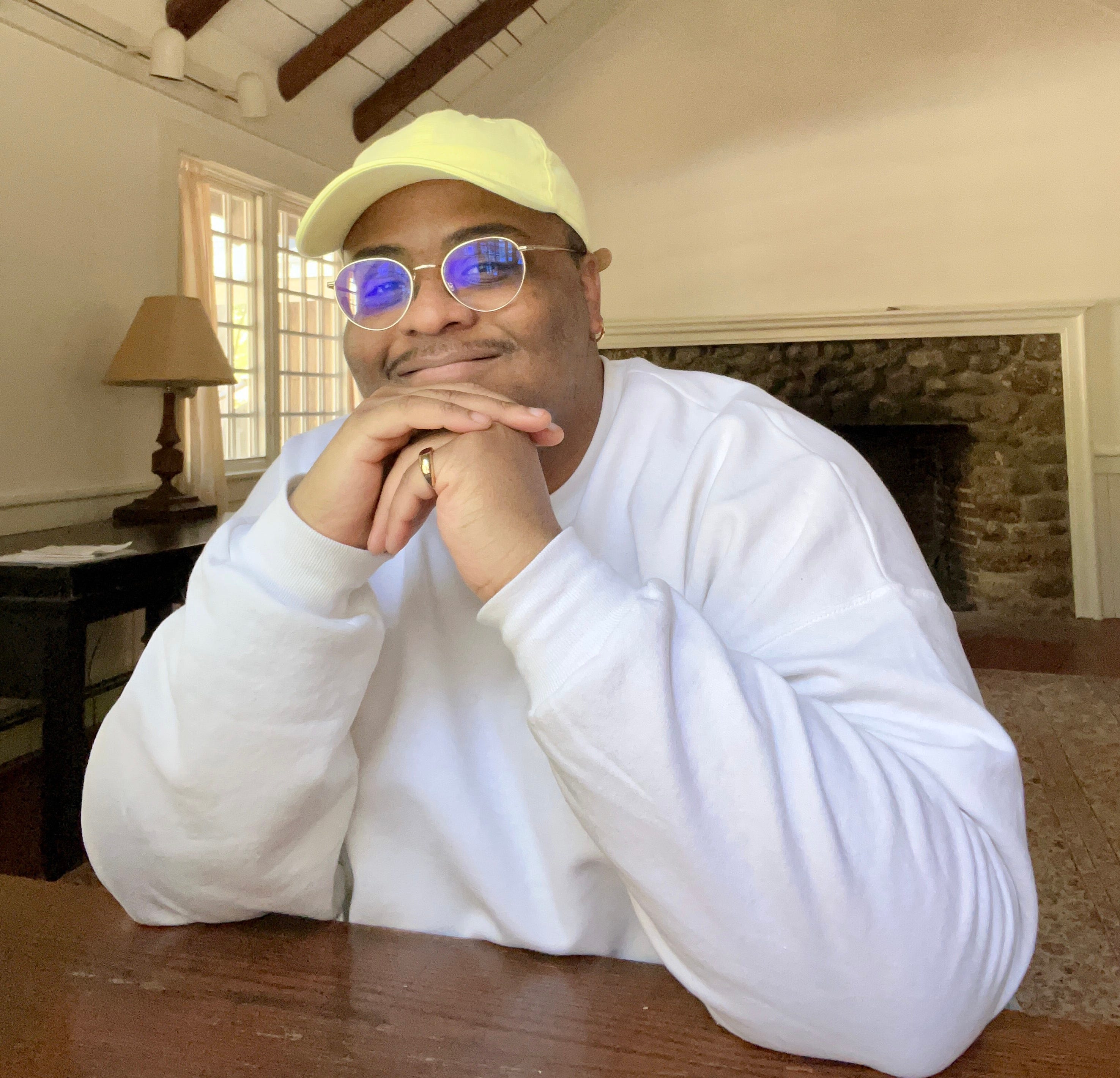
Aaron Edwards (he/him) is a writer, story editor, and director working across audio, print, and stage. He’s directed live storytelling shows at BAM and Lincoln Center for Pop-Up Magazine, edited special projects as a founding editor of The Outline, and has written for places like The New York Times and The Atlantic. He was a 2023 MacDowell Fellow and was named a 30 Under 30 honoree in Forbes. Follow him @aaronmedwards on Instagram and Twitter or learn more about him here.
You have some very fun and immersive sounds (Whoopi made me chuckle every time) in your episode. Do you have a favorite sound or moment?
Ha! The Whoopi audio was 1) me being dumb and 2) a way to say “this is very personal, but you can relax your shoulders.” I love how humor works that way. Also, my friend Jazmine Hughes (whose voice is in the piece) won an ASME for her profile of Whoopi a few months before. So she was very much on the brain. It created clear bookends for every act, too.
But the voice memos from Jazmine and my friends around the 0:46 mark are my real babies in this piece.
I’m not an audio producer by trade. I hosted a tiny (but mighty) show at The Outline back in 2018 (produced by fellow Fluxer Jazmine “JT” Green!) but my more formal entry point into the medium came after a layoff in 2020 when I started getting freelance work as a writer and story editor on shows. So when Audio Flux invited me to participate, I had to get creative about what kind of “original tape” I’d use because frankly, I didn’t have much. Voice memos mean a lot to me, and the piece was meant to feel diaristic, so it was a natural choice. My friends’ voices are like little symphonies to me. It’s kind of fitting that I ended up choosing ones that all sound melodic.
What previous media/creations of your own or by others helped inspire you for this?
When I started making GRAMS, I’d just finished a video game called Season: A Letter to the Future, where you play a character who’s trying to document the world through audio, visuals, and writing before a flood sweeps everything away. You’re essentially this interdisciplinary artist collecting materials to craft the world’s final diary entries. It’s incredibly meditative and put me in the best headspace to make a story like this.
Three minutes can fly by when you’re trying to tell a story. How did you decide what to include? Which locations and moments to take the listener to?
Once I decided to use my psychedelic journals as the bedrock for the scripting, a three-act structure emerged naturally. And as much as I kick and scream about always wanting to break from “conventional” structure, there’s something satisfying about it.
I had three robust journal entries that stood out to me, each from a different location. And I had three minutes to tell the story I wanted to tell. So I stopped kicking and screaming and just tried to let the materials and sandbox guide me. It felt apace with the ethos of Audio Flux in general, too: to lean into the ways prompts and organizing principles can be interpreted.
That back-and-forth negotiation between convention and experimentation often gets me closer to my instincts. I trust those instincts a lot, but activating them can be a challenge. And I got the closest to creating from that place than I have in a long time with this little 3-minute piece. I’m incredibly grateful I was asked to be part of the project. It couldn’t have found me at a better time.
The pacing and rhythm of your writing stands out in this piece. How would you describe your style of writing for audio?
That really means a great deal to me! It’s something I take a lot of care with. With this piece in particular, the writing and delivery starts off a bit stilted, kind of tentative. Short bursts. Small thoughts. Little observations. But as you move through it, you get sprinkles of longer sentences that unfurl more. And by the end, the writing gets more loose. It sounds less like recitation and more like how I actually speak. I tried to mirror the feeling of a shrooms trip from start to finish in those 3 narrated minutes — the initial undulations, the cosmic self-awareness, and the comedown that gives way to clarity.
Writing for audio can be so romantic. And if anything, I’d describe my style in the form as a steady seesaw between flourish and succinctness.
There’s a strong build up and moment of vulnerability when you reveal why you started taking mushrooms. Was this the driving force all along? Something you found along the way? How did you decide the purpose of this piece?
I actually didn’t expect to talk about my OCD until I got to that part of the story on the page. I think my very first draft of the written script ended with another moment at the Renaissance tour in Houston. But it didn’t feel totally finished. And in the spirit of what I’d done in the piece up to that point, I just decided to be honest. So I guess in a way, the driving force was honesty — and all the humor, sincerity, and corniness that comes along with that for me.
🚨If u only have time for 1 thing🚨
Tonya Mosley’s new 10-episode series She Has a Name is giving me real You Didn’t See Nothin’ vibes—that’s one of the biggest compliments I could give a podcast. Tonya and her nephew Antonio Wiley are investigating the sister Tonya didn’t know she had, Antonio’s mother Anita (“Unknown Woman 1987”), whose remains were found in a building that was intentionally set on fire in 1987. It wasn’t until recently that the DNA confirmed Anita’s identity and that Antonio contacted Anita. They’re piecing together Anita’s life by talking to relatives to reimagine the 1980s Detroit that Anita left behind. This family mystery feels like it’s unfolding before our eyes. It feels like Anita is present, somehow, waiting for us (well, waiting for Tonya and Antonio) to finally tell her story.
hell yeah
⭐Podcast!⭐Group!⭐Therapy!⭐is scheduled for Friday, April 26th—we’re covering the versatility and power of podcast promos. Sign up here. There are still a few open spots!
✨Why Nonfiction and Fiction Podcasts Need Each Other [via Podcast Marketing Magic.]
✨Arielle Nissenblatt spotlighted The Tim Dillon Show in her newsletter and podcast.
💎BTW💎
🎙️Because it’s incredibly independent and handmade, Butt Out, Baby! (the Dirty Dancing scene-by-scene appreciation podcast) is coming out with new episodes as fast as producer Butt Out, Baby! can make them happen, which isn’t fast. Since the show is schedule-less, I find myself checking the feed on a weekly basis and savoring every single episode like I’m stranded on a desert island and it’s my last piece of subsistence. It’s accidentally smart marketing—I write about every episode, cherish every episode. And when there’s a new episode I usually listen to the last few again to remind myself what happened in the last scene. Every episode is so rich I don’t mind relistening. The latest isolates a moment when Baby and Neil are uncomfortably dancing and sussing out each other’s politics. Fun fact: In the film, legendary tap dancer Honi Coles is tap tap tapping-away in the background, which launches Ellie into discussions about the history of tap (did you know it came from plantation dances?), Latin music, and how The Twist broke up couple dancing. It also zooms in on that moment when Johnny and Penny enter the scene, stealing everyone’s attention, and why exactly exactly exactly that moment is so important to illustrate the politics of the film. (“Baby’s eyeballs are swallowing the dancing,” Ellie writes.) This breakdown is great. I totally get why these episodes take so long to make and I love them to death. If you have no idea what I’m talking about go watch Dirty Dancing and then download Butt Out, Baby! Listen here.
🎙️When writing her novel The Sicilian Inheritance, which is loosely based on the murder of her Grandmother Lorenza in Sicily in 1916, Jo Piazza (Under the Influence, Wilder, Committed, She Wants More) became fixated on the real story. In her podcast (also called) The Sicilian Inheritance, she’s going back to the mother land with her husband and three small kids to track down why while her grandfather and other relatives were coming by one by one to America, Lorenza never made it. This feels like a mystery, a travelogue, a memoir, and a call with your friend Jo, who is narrating her every move. “Italian Americans like to tell stories and they like to embellish everything,” she says, and I can appreciate this because my grandfathers came to America from Palermo and Naples at the same time Jo’s did. Was Lorenza murdered by the Black Hand, the Sicilian mafia? Was she a witch? Or is this a story of a family cooking up their own juicy tale for the love of drama? Seriously—knowing my own Italian relatives, I believe the later could be true. But I’m two episodes in and I’ve changed my mind. This is fun. Also, this show is made by Kaleidoscope, the same people who brought you Skyline Drive and Wild Chocolate. And like Wild Chocolate, there’s a food element here—The Sicilian Inheritance-inspired olive oil, direct from Sicily. Listen here.
🎙️Drifting Off with Joe Pera is on hiatus (if you haven’t listened, start with my favorite episode Christmas Tree Lit, but do not fear because its composer Ryan Dann has launched Holland Patent Postal Union, a “show of audio letter exchanges,”—audio letters with beautiful soundscape—that will lull you into a state that is both relaxing yet stimulating. The shows are vibe cousins. I fell asleep listening to Ryan talking about pulling the arms off a Stretch Armstrong and making Mrs. Doubtfire “hello” noises on an airplane, woke up and was like of like what just happened where was I?, then listened again when I woke up. Ryan hopes to raise money on his Patreon so he can hire other musicians and writers to exchange letters. Listen here.
🎙️Oh my god was it really ten years ago that we heard that music introducing us to Serial every week? That skin-crawling, sinister, “Chopsticks”-sounding carnival fun-house of a theme-song. (How would you describe it? I have been thinking about this for days. In my research I discovered that it’s aptly titled “Bad Dream.”) Anyway, I miss that time of my life, when a single podcast seemed to unite so many people around one story and we could all talk about it every day, or even start a Serial Club where we listened and ate cereal together every time an episode dropped. That haunting (needling? that is how Arielle described it when I asked her) song is back, it feels good to hear it again, this time with Sarah Koenig and Dana Chivvis taking us to Guantánamo to hear from guards, interrogators, commanders, lawyers, chaplains, translators, and former prisoners to find out what it’s really like there. I went in expecting one story to pull me along—this is Serial, after all. Instead we’re getting many stories, hearing many voices. I admit I was kind of thrown off. But I’m enjoying it. I’ve never heard Guantánamo talked about with such light treatment (I think Sarah and Dana buy Disney/Guantánamo souvenirs?) and I’ve never heard Guantanamo sound like so much fun (guards like to party,) and while it gets into more serious corners of the prison, it’s done with a certain casualness that I enjoy. Listen here.
🎙️Dissect, “analyzing the music and meaning of one album per season, one song per episode,” has chosen MF DOOM for season twelve, starting with Doom’s origin story as Daniel Dumile and how he went from losing his brother and musical partner and getting dropped by his label, to reemerging as MF DOOM in the late 90s. My husband plays MF DOOM all the time and I’ve always enjoyed it, but there’s a storytelling to this music I didn’t understand—each album is a multi-character musical universe that feels pulled from a comic book and yet completely human. Understanding the storytelling behind it makes me love it. This season is getting behind the villain’s mask. The songs literally hit differently for me now. Start here.
🎙️Songs My Ex Ruined invited Chris Gethard on to talk about one of my favorite songs, The Pogues’ A Rainy Night in Soho. This is the last episode of Songs My Ex Ruined we’re going to be getting for awhile and it was a good one. It really hit home why this show exists. Chris struggles with the idea of loving a song but physically being unable to listen to it, and the idea of having a person who was so instrumental in your development as a person is someone you can’t talk to anymore. I’m a new mom and appreciated this parenting tip: before you have kids, learn the words to as many songs as possible, because you don’t actually know the words to as many songs as you think, and you need those song lyrics to get a baby to sleep. I have been singing my daughter tons of Pogues songs and A Rainy Night in Soho is a good one—sometimes Pogues songs are difficult to sing along with, due to a drunk Shane McGowan or heavy Irish slang. But A Rainy Night in Soho is crystal clear. God I can’t believe Shane McGowan is dead. If you’re new to Songs My Ex Ruined, go through the archives and hope it comes back sometime soon. Listen here.
🎙️You don’t have to imagine if Footloose was real but set in Seattle in the 90s with Nirvana blasting in the background because it actually happened, and music journalist Jonathan Zwickel is explaining it to us in Let the Kids Dance. It’s the story of Seattle’s Teen Dance Ordinance, an almost 20-year effort to stop anyone under 18 from attending concerts without an adult. All-age music was a crime. It was police vs punks, and the punks fight back, and I have a feeling the punks win. This deep pocket of pop culture steeps you in 90s grunge and takes you to meet the people behind historic places like the Monastery and Gorilla Gardens and The Stranger’s coverage of the all-ages concert scene, which were at the center of it all. Listen here.
🎙️The Eleanor Williams story blew up in the UK, not so much here, so the podcast Unreliable Witness will probably be the newest scam artist you didn’t know about and your newest obsession if you loved Scamanda, Believe in Magic, etc. In 2020 Eleanor posted a facebook video claiming she was assaulted and trafficked into an Asian grooming gang. The men she accused were attacked, boycotted and riots were started, with a racial overtone around everything. But then Eleanor was convicted for perverting the course of justice and very strong evidence was put against her that she had lied. This podcast goes back into that case and speaks to everyone involved—police, Eleanor's family, the men accused. It sheds a lot more light on her and why she did what she did, as well as the questions that still remain around the case. It's a really nuanced and thoughtful look at the whole thing. When you have an unreliable witness like Eleanor, what on earth can you believe? Listen here.
🎙️Taylor Lorenz recently launched an internet/tech show, Power User, where she’s covering everything from online fame to emerging platforms, viral phenomena, disinformation, etc. On the first episode she had unpacked all the buzz around Congress's effort to force a sale of Tik Tok and what it means for our civil liberties, plus she tackled MrBeast’s new Amazon deal, shrimp Jesus, LinkedIn’s focus on gaming and a confusing newsflash that people are poking each other on Facebook again? I felt very caught up in this quick-paced, entertaining episode, and I haven’t missed an episode since. Listen here.
🎙️I am always, always trying to get people to join me listening to The Daily Zeitgeist every day, sometimes twice a day. The only people I know who do it are my legal husband and my other husband Arielle. (The Daily Zeitgeist is what initially bonded us.) Please listen to this show every day, sometimes twice a day. Is it too much to ask? In case it’s too confusing—Wednesday through Thursdays there is a morning episode going over the news with a comedian, then at night there’s a “Trending” episode that goes over the latest stuff trending in the world. Tuesday there is just one episode and it’s usually with some sort of expert and it’s a deep dive into something a little more brain exploding, like redlining, but it’s always still very entertaining. On Mondays there is a trending episode only, in the evening. Got it?? The reason I’m bringing this up now is because Sarah Marshall (You’re Wrong About, You Are Good) was on a deep dive Tuesday episode so maybe now’s your time to try it out, maybe this will me your gateway episode into the Zeitgang—that is how we identify. Join me and my husbands and the rest of the Zeitgang here.
🎙️I love you!
📦 From the Archives 📦
[From November 23, 2020] The Constant consistently has in-depth episodes on pieces of our history that always make me think to myself, “how did I not know of this?” Such is the case of the story of Gregor MacGregor, who, in the 1800s, swindled British and French investors to buy into his fictional Central American territory called "Poyais." Hundreds of people emigrated to Poyais thinking they were seeking the promised land, only to find only an untouched jungle waiting for them. More than half of them died. Someone page Laci Mosley…Gregor MacGregor should have his name on a plaque in her scam artist hall of fame. As always with The Constant, this story is told with contagious enthusiasm for the history, and a detailed exposé of MacGregor, who sucks.
OMG such a feast here Lauren! Feeling spoiled - I don’t know where to start. Soundscapes, Anita calling to us, Eleanor, the list goes on.
Thank you for this!