


🍕 Hot pizza takes 👵🏻 a shocking closet skeleton 💀 the real 90 Day Fiancés 💍 fantasy drafting music festivals 🎸
🍭 👂 TRUST ME! 🌈 🤸♀️

Bonjour.
Today is Monday, August 14. In case this newsletter is too long…Dead Eyes’ Connor Ratliff is back with something totally different here, a shocking skeleton in the closet here, a network tries to set the record straight (on some kind of irresponsible reporting) here.
[I will never charge you to read Podcast the Newsletter. If you’d like to buy an ad, inquire here.]
xoxo lp
ps If you are pleased with Podcast The Newsletter, please spread the word.
👋q & a & q & a & q & a👋
Dylan Marron
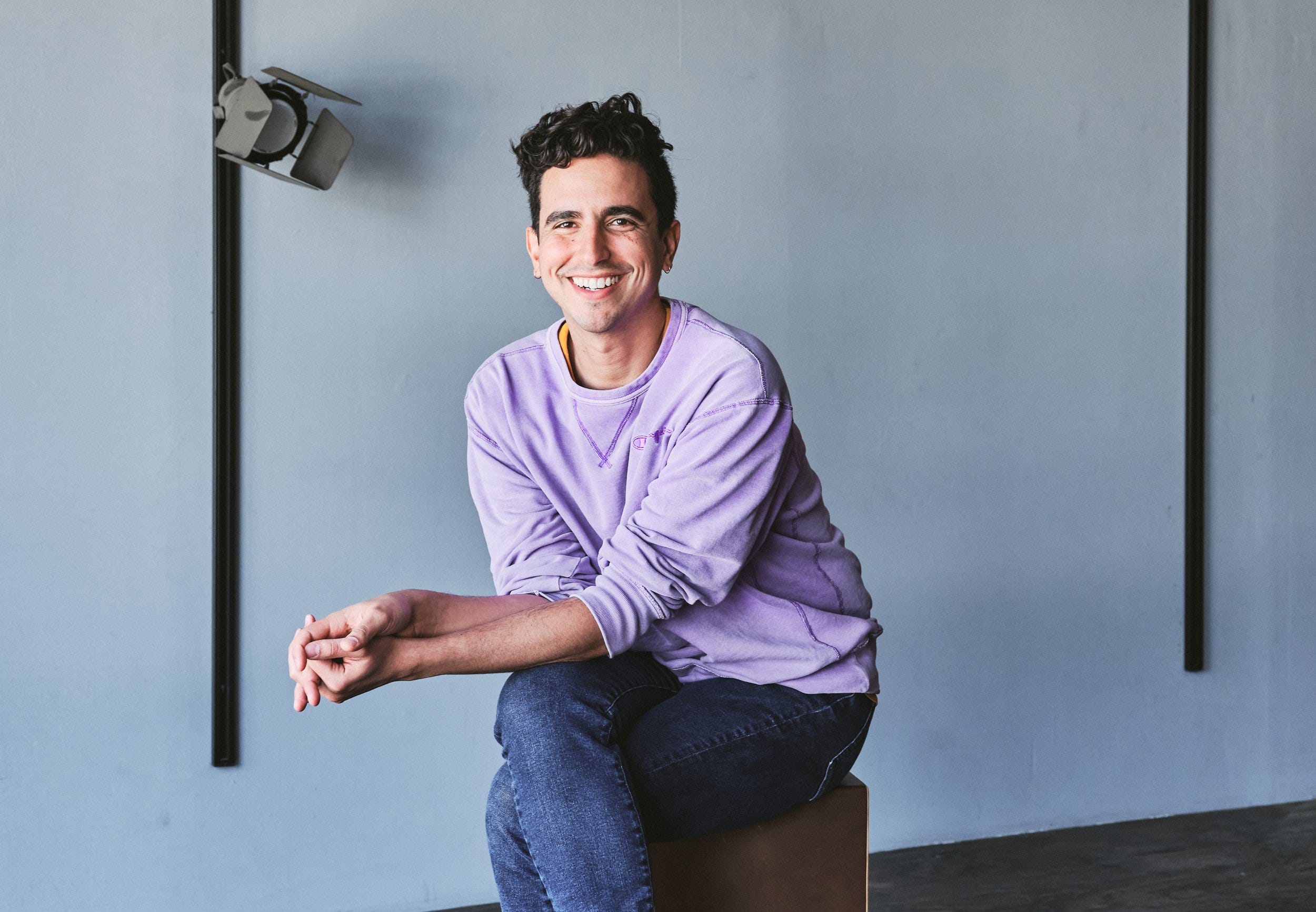
Dylan Marron spent five years making the podcast Conversations with People Who Hate Me and later wrote a book of the same name about what he learned in those five years. He recently joined the third season of Ted Lasso as a writer. He’s here to discuss his latest podcast, The Redemption of Jar Jar Binks. Follow him on Twitter here, IG here.
Describe The Redemption of Jar Jar Binks in 10 words or less.
A deep dive about the internet’s first main character.
Your work feels mission driven. What’s your mission?
I think I care most about finding humanity in spaces where people are easily dehumanized. My very first big digital project was a video series called Every Single Word. It’s basically a supercut series in which I edited down popular movies to only the words spoken by people of color. That project asked: what do we lose when we consistently marginalize people of color in popular storytelling? The same is true for my interview series Sitting in Bathrooms with Trans People. How do anti-trans bathroom bills dehumanize the people at the center of the issue? Conversations with People Who Hate Me was a social experiment that proposed a model of digital restorative justice for online hate. Can we actually address the problem of online discourse by humanizing both the “hater” and the “hated”? The Redemption of Jar Jar Binks is no exception. If I’ve done my job right, by the end of the show’s six episodes I hope my listener is asking themselves this: who is it acceptable to make fun of today? Jar Jar Binks was cool to not like. It was funny to dunk on him. And now, in hindsight, we see how disastrous that was for Ahmed Best, the actor who played him. Who are we treating like that today? Who is it acceptable to hate?
What are you most proud of?
In life?! Oh dear. Gotta get back to you on that one. In this podcast? Hm. There was a particularly tricky part of this story to tell. Jar Jar Binks was not only hated by a group of disgruntled fans. Jar Jar also drew a completely different type of backlash from a different group of people: scholars, activists, and film critics who criticized the character for evoking racial stereotypes. This is the part of the criticism that hurt Ahmed the most because it often came from other Black people, his own community. It would have been an egregious omission on my part to not include this in the story, and yet I wanted to tread incredibly carefully so as not not to bruise old wounds. Or to take a side. I’m glad we didn’t compromise our integrity as storytellers—or humans—in presenting this side of the story.
How did making Conversations with People Who Hate Me prepare you for hosting The Redemption of Jar Jar Binks?
Conversations with People Who Hate Me is all about fostering empathy for people we’re encouraged to not empathize with in spaces where empathy isn’t easy to foster. The tagline of the show is “remember, there’s a human on the other side of the screen.” Jar Jar Binks is, to me, the ultimate example of the human on the other side of the screen.
Who is this podcast for?
It’s for people who have never seen a Star Wars movie, but are interested in the intersection of pop culture and internet culture. It’s also for die-hard Star Wars fans who want to hear a story they don’t know well about a character they probably know quite well. And everyone in between.
What’s your own relationship with Star Wars, and how did making this podcast change how you feel about it?
Honestly, I’ve seen every Star Wars movie multiple times. But more out of duty to cultural awareness than true fandom. I really enjoy them, don’t get me wrong, but I have true Star Wars fans in my life. The kind of people who can name every single character in the periphery of every scene. I am not that deep in it. Making this podcast gave me a crash course in the Star Wars Universe, and the wonderful people who helped build it.
How did you approach Ahmed Best about this idea? Did he like it right away?
I had actually been trying to get in touch with him for quite a while! First through an email I don’t even think is active anymore. Then I tried the good ol’ fashioned follow approach, where I followed him and waited for him to follow me back. (It didn’t work!) Once I brought TED on board to produce the show, they helped me connect with him. I had a whole email ready to send that I had labored over, but it was really our first zoom call when I had to really pitch this conceptually. Or rather, I had to pitch myself. Why was I the person to help tell his story? I guess it worked!
How do you get people to open up about uncomfortable things? (Like when you’re approaching someone who has spewed hate on the internet?)
Earn their trust, keep their trust, and make them feel as safe as possible. I’m hesitant to make generalizations about “all people” but I can say with certainty that every single person wants to feel safe when they tell their story. Even people who rail against safe spaces. They want to feel safe, too. They just might call it something else.
Self-care ritual: Watching cars be cleaned on YouTube.
🚨If u only have time for 1 thing🚨
Peabody award-winning producer Lea Thau is an expert storyteller, and her podcast Strangers is a knock out, curious show that lets us wiggle into some of the most intimate moments of people’s lives, hear whispers of their secrets, and be thrown into their experiences. There hasn’t been an episode for awhile, but if you haven’t listened, set aside some time. You’re going to want to listen to all of them. Start with the episode Do You Like My Little Lie?, one of the heaviest stories I’ve heard on a podcast. It chilled my bones. Lea talks to Claudia, who finds out about something terrible her father did to another member of her family. The story is disturbing and gruesome. (There are details about—trigger warning / spoiler alert!!!—a grandmother’s scalp that I cannot get out of my mind.) But it’s told with beauty and tenderness, it somehow rolls along like a gentle (albeit eerie) song.
hell yeah
✨I’m hosting a Podcast Marketing 101 workshop with Radio Boot Camp 9/18. Sign up now!
✨ I’ll be in Denver at Podcast Movement, speaking on August 22 at 11:15am (Podcast Marketing Maintenance) and 4:15pm (Podcast Clinic with Arielle…we’re be wearing lab coats!) Come say hi!
✨Two Lifehacker pieces for you: 12 Comedy Podcasts As Smart as SmartLess and 12 Podcasts That Will Improve Your Work Life
✨Read my Descript piece: 7 strategies for getting your podcast guests to share the episode (and does it matter?)
✨ Read about How to Be a Call-in Girl via Podcast Marketing Magic.
✨Arielle Nissenblatt spotlighted Podcast 360 in her newsletter and podcast.
💎BTW💎
🎙️Honestly I wasn’t that excited to turn on Pizza Pod Party (I have witnessed exciting-sounding food shows turn into mediocre, repetitive duds that sound just like every other food show, no matter the niche topic.) But I found myself listening to three episodes of this one at once. I loved it. Hosts Arthur Bovino and Alfred Schulz give you pizza news, a pizza topic, and chat with a very special celebrity guest. I don’t think I realized until listening how badly I needed pizza news (the news on this show seems to be extremely specific to my exact neighborhood, New York City’s East Village,) and how talking about pizza is such a rich topic for debate and says so much about culture. (I have always noticed that on Awesome Etiquette, a large piece of the content pie is always dedicated to pizza etiquette and arguments.) Pizza is something that people have strong opinions about. I have gotten in a fight with people in Naples over my preference over Roman-style pizza. Those Italians are nuts! Guest Michael Ian Black has so many hot (pizza) takes about pizza at Children’s birthday parties and Pizza Cognition Theory, and seems uniquely qualified. When he was nineteen he left school to be a promo turtle for The Teenage Mutant Ninja Turtle’s Coming Out of the Shell tour. Speaking of that, please listen to the Bizarre Albums episode about the Coming Out of the Shell soundtrack. And now that we’re talking about pizza, I must recommend the this episode of Recipe Club, in which David Chang, Bryan Ford, and Chris Ying compete to make the best Boboli. It’s hysterical. Listen to Pizza Pod Party here.
🎙️On Being Black: The ‘80s, Touré is teaching a history class on the ‘80s via a track list of hip hip songs—not the best ones, but the ones that define what was happening to Black culture in that time—the crack epidemic, gay liberation, mass incarceration, and more. It’s like a 3D book on tape, with interviews, music, and history all woven together. Songs like De La Soul’s “My Brother’s a Basehead” and NWA’s “Dopeman” are used to explain how crack dealers and their culture had a deep influence on hiphop culture, the Black community, the hip hop entrepreneurial spirit, and how crack decimated families. Touré tells the story of Donna Summer’s being inspired to write “She Works Hard for the Money” after observing a waitress sleeping during her shift. Bob Marley’s “Redemption Song” paints a picture of the Black spirit and the determination that pulled many Black people through life in America. An interview with Royce Da 5’9” about being unable to cry at his grandmother’s funeral because of the stoicism forced upon him from dealing crack stopped me. I’m blowing through these episodes. Touré is the perfect person to do this. His journalism and the conversations he’s had on Toure Show gives him the perfect background to provide all the context and complexities that exist when we’re thinking about Black American history. Listen now.
🎙️Chelsey Weber-Smith’s You’re Wrong About episode about fairies takes us to so many unexpected places, but focuses on Elsie Wright and Frances Griffiths, young cousins who played a prank on their adults by manufacturing a fairy photo that was so convincing that Sherlock Holmes author Sir Arthur Conan Doyle thought it was real. This prank changed Doyle’s life, he went to his grave without learning the truth. (The cousins agreed not to tell him while he was alive in an effort to protect his feelings, something I can safely say all women are really fucking sick of doing.) This got Sarah and Chelsey talking about spirit photography’s rise after the Civil War, when people needed to feel a connection with their relatives who died in battle and felt a less of closure. Things like photographs, electricity, morse code, and other inventions often make us so scared that we end up trying to explain them away with paranormal explanations. You’re Wrong About is often about hoaxes with terrible consequences. The consequence of this one was that Sir Arthur Conan Doyle looks like a dumbass. This episode is about light-hearted hoaxes, not big terrible ones that cause death and division. I’m going to quote Chelsey: “These weren’t tricks, but the opportunity to be humbled by what we don’t know.” Listen here.
🎙️Tales of Taboo is back with a new season, the first episode shares stories from listeners who got green cards for love, it’s a great antidote to 90 Day Fiancé. Those stories sure are messy, but in some ways they’re more seamless that what has happened to these real people going through the same thing. (All the storytellers say their process was much more difficult than what they see on TV.) So it’s interesting for that, but it’s also a nice little collection of love stories (and a few non-love stories) about couples who are together despite the fact that nobody thought they should be, including our government. These people made quick decisions to change their lives drastically because they fell in love hard. It’s almost an hour of stories but when it was over, I thought…that’s it? I could have listened to another hour. (Although I advise you to skip through the intro to 8:40ish, when the stories begin.) Listen here.
🎙️An interesting product of Strike Girl Summer is that when we get interviews with movie and TV stars who can’t talk about their work, they end up talking about…a lot of other things. A Gender Spiral interview with (Yellowjackets star) Liv Hewson ended up being such a personal, beautiful, and optimistic conversation that it makes you remember that our work isn’t what defines us and that fascinating things come out when we aren’t on a PR circuit. This is Gender Spiral, where gender variant people open up about what it’s like to live in a gendered world, and Liv had space to talk about the transformation from feeling like they’re living in a limited world to a free and expansive one, going from existing in a feeling of scarcity to abundance, as they realized they were non binary, and the joy of top surgery. It’s such an optimistic conversation. I was struck to hear Liv say that when people asked them about masculinity and femininity they literally didn’t know what those things meant, they never did. I am too old and fucked up by growing up in the 90s to know what that’s like. They also talk about the deep relationships they can have with cis people once they set a high bar for them to try to break free of the severe definitions we have about gender. I’m not sure we would have gotten such a wise and joyful conversation had we been asking Liv about what it’s like offset of her hit show. Listen here.
🎙️Remember Dead Eyes? Of course you do. Its host Connor Ratliff is bringing those dead eyes to In the Cards, an audio drama about Gil (Connor,) a comically unlucky, low level ad guy (he writes copy for table tents) who finds out via tarot cards that yes, the universe is against him, which prompts him to take charge of his own fate for the first time. In the Cards is sweet and funny. The sharp writing pops and is sprinkled with Gil’s self-deprecating humor and really thoughtful, existential things about our destinies. All sorts of fiction fans will find something to grab onto. There’s comedy, romance, supernatural elements, and a really delightful story that flies by. Listen here.
🎙️On The Line-Up, Shaun Keaveny spends time with music-loving guests who build an imaginary music festival, dreaming up their five favorite acts to see on stage, as well as the snack, tent, and toilet situations. It feels a little like Hot Ones—Shaun intersperses his conversation about his guest’s perfect day of music with questions about their background. I loved the two-parter with Johnny Marr, who seems like such a normal person, just a regular old Patti Smith fanboy, who also happens to be a genius and key-contributor to culture who has been reinventing himself, and creating trope-less music for decades. (Guitar culture + futurism = Johnny Marr.) He sees music festivals as ways to transcend consciousness and achieve liberation, commonality, and beatific vision. Start here.
🎙️Usually on Culpable, Dennis Cooper spends entire seasons exploring unsolved cases, but the new one is episodic. The first case is a two-parter about Andrew Thomas Wall, who was found dead in his Cincinnati apartment from an apparent drug overdose two years ago. But some weird details found around his body and some people he met leading up to his last day are making his family feel like they’re missing pieces of the puzzle. It’s not a mystery about how he died, really but his family—you get to hear from them and it’s still so fresh—just wants to know what really happened. For some reason it reminds me of the story of Chris McCandless. Start here.
🎙️Podcast 360 is doing a twist on the traditional podcast, featuring podcast company founders interviewing each other as they answer three questions about all things podcasting, like content production, building a successful brand, sales and marketing, or founding a podcast-based business. Each founder first acts as a guest in their first episode, and then they become the host of the next episode as they choose another founder in the industry for us to learn from. We learn not just what the hell is going on behind the scenes of thee companies (I’m so curious!) but there’s also a fun two-truth-and-a-lie game that threads along the stories, which makes the whole thing a lot more fun. You’ll never get sick of the interviewer because the interviewer changes all the time. Donald Albright of Tenderfoot is interviewed by The Podcast Academy’s Amanda B. Nazareno in the first episode; he then goes on to interview James Cridland. I love the way this show is mixing things up and providing the podcast industry with much-needed transparency about the way we’re building things in t his space. Listen here.
🎙️Dear Media launched their first ever true-crime podcast, Believable: The Coco Berthmann Story, exposing the true story of Coco, who became internet-famous sharing her story of surviving sex trafficking as a young child growing up in Germany and later was arrested after raising money for a fake cancer diagnosis. Dear Media is implicit in the Coco media storm—an episode of Dear Media’s The Skinny Confidential helped launched Coco’s lies into the spotlight. Believable is Pulitzer Prize-winning journalist Sara Ganimthe‘s deep dive (she literally visits the underground tunnels that Coco claims were a hotbed of sex trafficking and murder) into Coco’s fabricated life, exploring her rise to notoriety and the impending trial, and an investigation into what Coco lied about, and the things she didn’t. And as Samantha Hodder in Bingeworthy points out, it uses an AI voice to portray Coco. Coco’s story, turns out, is too unbelievable to be true. She should have been a fiction writer. It’s one hell of a story. Listen here.
🎙️There are ten million podcasts about the Free Britney Movement, the Murdaugh family murders, JonBenet Ramsey, and the Salem Witch Trials. But how many of them look at these stories through the lens of astrology? Allegedly Astrology does, tackling true crime, scandals, and celebrity gossip with a little help from star charts. Hosts (Astrologer) Dana DeFranco, Elyse Carlucci, and Sarah Dembkowski are friends who add a layer of your knowledge about the true crime, scandalous, and celebrity gossip rabbit holes you’ve been getting lost in. Listen here.
🎙️We just passed up the 35th anniversary of Die Hard, a great time to listen to Die Hard On a Blank, where hosts Philip Gawthorne and Liam Billingham explore the influence of Die Hard on action cinema, one action movie at a time. Jamelle Bouie is a great writer and thinker and movie-lover, and his episode about Cliffhanger was fun but smart—Jamelle takes action movies seriously. The 90s action boom is a movement in pop culture that’s deserving of real analysis. Listen here.
🎙️I love you!
📦 From the Archives 📦
[From February 28, 2020] The Baron of Botox has been a chilling ride. It follows tragic life of Dr. Fredric Brandt, who went from being the dermatologist of the stars, to the butt of a joke on Unbreakable Kimmy Schmidt, to a depressed man who took his own life. On the surface, Dr. Brandt seemed a cheerful man who loved his work and his clients, but those who knew him better were able to see that something wasn’t quite right. As The Baron of Botox pieces together the last days of Dr. Brandt’s life, it becomes clear how seriously everything was wrong. I feel a little helpless, listening. In retrospect, all signs point to a man who needed help. But while they were happening, I’m sure they just felt…strange. (Dr. Brant literally gave the shirt off his back to a friend who mentioned she liked it.) I kept returning to this line in the episode: “When you’re trying to piece together the last few weeks of someone’s life, it can begin to feel like an abstract painting. The things people remember can take on new meaning in hindsight. Details become storylines.”
From the Desk of Tink
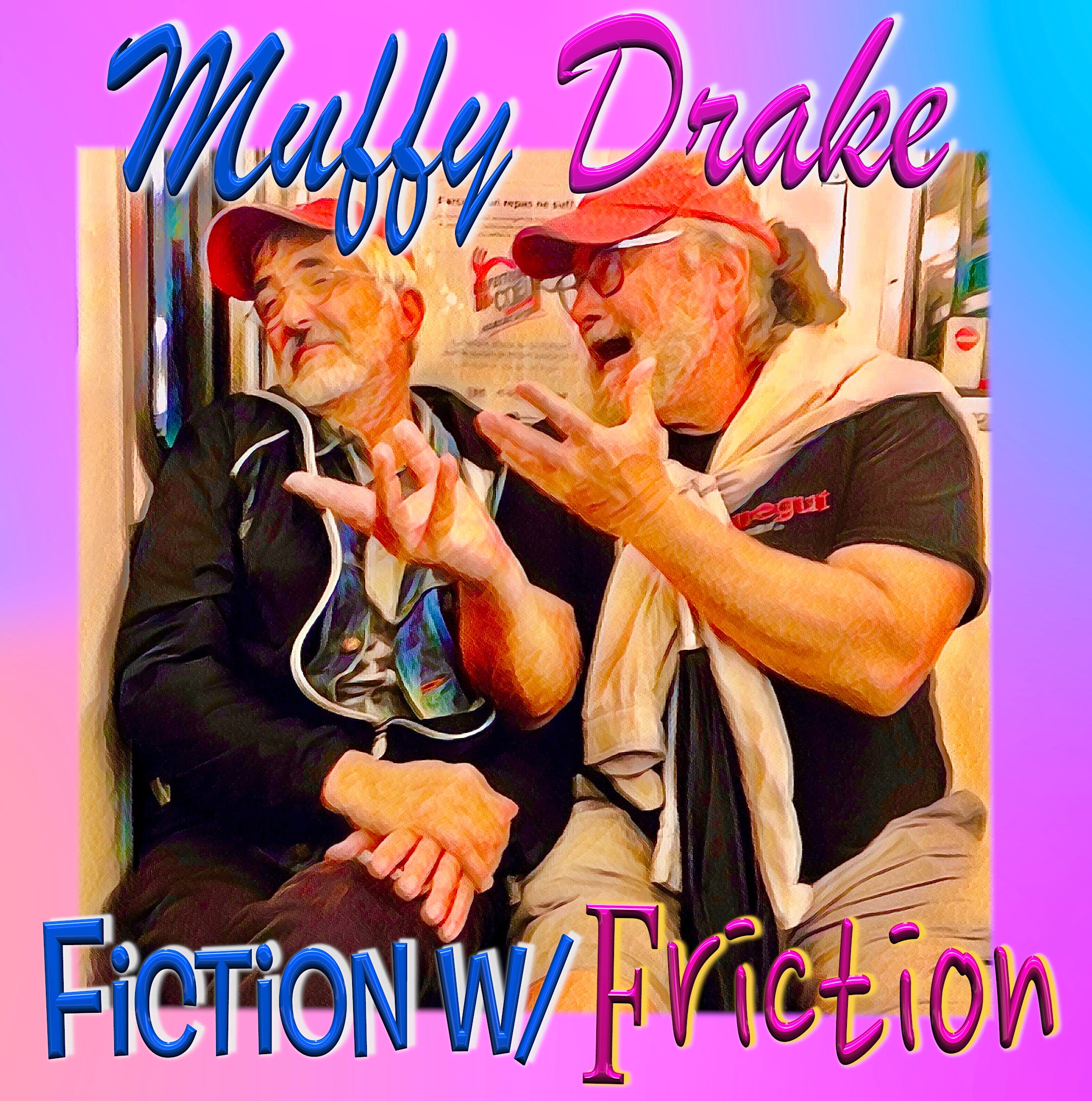
Today we’re talking to Jim Hall and Xavier Combe, the creators of Muffy Drake, a wildly imaginative fiction show (“fiction with friction”) that offers listeners portals into strange worlds. We met them in a Podcast Therapy session and absolutely fell in love with them.
What inspired Muffy Drake?
A Franco-American Alliance with my former doubles partner in tennis was 40 years in the making. Xavier Combe and I have talked about finding a project to work together on. Muffy Drake is the result.
How would you describe the show in 10 words or less?
Absurd and quirky stories told with a worldview.
Can you tell us about the name?
Muffy was the name of my first pet, a Maltese fluffy ball of love. The street I lived on at the time was Drake Avenue. Combine the two and that's your podcast name...we've been told.
Where should people start?
That's the fun part, anywhere. Every episode, you can parachute down and drop in to each one and not get lost. We totally take an a la carte approach to listening. There will always be something on the menu you like. We have a few recurring characters such as Bobo the talking orangutan, who also hosts many episodes.
What's your partnership like? How are you similar, how are you different?
Xavier has a gift for writing and narrating. Born and raised in Paris, X, conjures with every short story, a very French worldview and cares deeply about our planet and those who live there. I'm a Tater Tot kid from Pocatello, Idaho. I would pair a 1959 Chateau Lafite Rothschild with a block of Velveeta cheese in a heartbeat. I believe that illustrates the contrast between our two cultures and as absurd as that sounds, it informs our sense of humor.
Muffy Drake is an amalgam of our two personalities. A French sophisticate and an American rube, forever attempting to punch above his cultural and intellectual weight class. You can take the kid out of the potato patch, but you can't take the Tater out of the kid...
Why did you reach out for Podcast Therapy?
We were totally out of our depth with marketing and trying to figure out the discovery process for podcasts. I took a deep dive with exhaustive research of agencies offering services like TINK. What we found was that TINK took a 360 View of MD and gave us the tools to make changes that are STUNNING!
What was your session like?
Inspiring! The team at TINK was dialed in to our specific needs and we were amazed at how fluent they are in all aspects of the podcast biz. I'm sure we are like many podcasters, we know the production side of things, but are woefully lacking the chops when it comes to marketing and discovery. Trust me, TINK got CHOPS! The hour we shared left us revved up and ready to put their suggestions to work. Such a positive and empowering experience and vibe. If they had Descartes as a client, he might opine on their behalf: "I'm TINK, therefore YOU can."
Muffy Drake now has an eye-popping navigable website, an Instagram account and we're on Facebook. All thanks to this wonderful agency founded by Lauren. We look forward to future sessions and insights as we grow the MD experience.
Fill in the blank: you will like Muffy Drake if you like ______.
Laughter.
Anything else you wanna say?
Yes, the most important thing in life is to realize when you need help. None of us have all the answers. TINK was able to fill the question riddled hour with sixty minutes of vital instructions and a punch list we put into practice that very day.
Loved reading this as I am listening right now to the The Redemption of Jar Jar Binks 🙌
Always love this newsletter, but wanted to flag one thing: there's a part at the end of the gender spiral section where Liv Hewson is (accidentally) referred to with a "her" pronoun as opposed to "their"!