


👙 Victoria's Secret's secrets 🏝 an audio telenovela 🏙 swinging Spiderman 🕸 nostalgia 💭
💌Podcast The Newsletter is your weekly love letter to podcasts and the people who make them.💌

Bonjour!
Today is Monday, October 18. There are 226 days until I go on my next Disney cruise. If you don’t have time for the whole newsletter: An excellent show returns, I’m absolutely addicted to this, why aren’t more people talking about this?
This week we’re getting to peek into the listening life of Emily J Daly, a writer and producer. She's currently an assistant producer on the news and commentary podcast Our Body Politic, which centers women of color in politics. She's also written and produced for fiction podcasts, such as MTA Radio Plays.

The app I use: I just signed up for castbox! I have been using Apple Podcasts, but I started having some technical difficulties and thought I'd try something new. I've been on castbox for a few days now and I don't think I'll ever go back.
Listening time per week: 10-15 hours, on average.
When I listen: Whenever I can! I don't have the attention bandwidth to work and listen simultaneously, and I have a six month old baby, so I am almost always strapped for time. As a result, I pair podcasts and activities like a foodie pairs fine wine and entrees. Going for a walk in the stroller? Time to catch up on my regular politics podcasts. Up all night with a teething baby? I'm going to need a limited series with a gripping narrative. I love to find a show and binge it, especially podcasts focused on current events, and I have been known to do extra laundry just so I can get to the end of an episode.
How I discover: Previously, I found shows by recommendations from friends, and from newsletters (like Podcasting the Newsletter!). But now that I've made the move to castbox, I've quickly found even more shows I want to dig into. I'll be doing a lot more stroller walks and laundry clearly.
Anything else? Check out Our Body Politic. You'll hear how women of color experience the major political events of today, and also how they're impacting those very issues. We're always looking for listener feedback, and you can send us your thoughts and feedback through our website.
xoxo lp
ps If you are pleased with Podcast The Newsletter, please spread the word.
👋q & a & q & a & q & a👋
Hallie Rubenhold
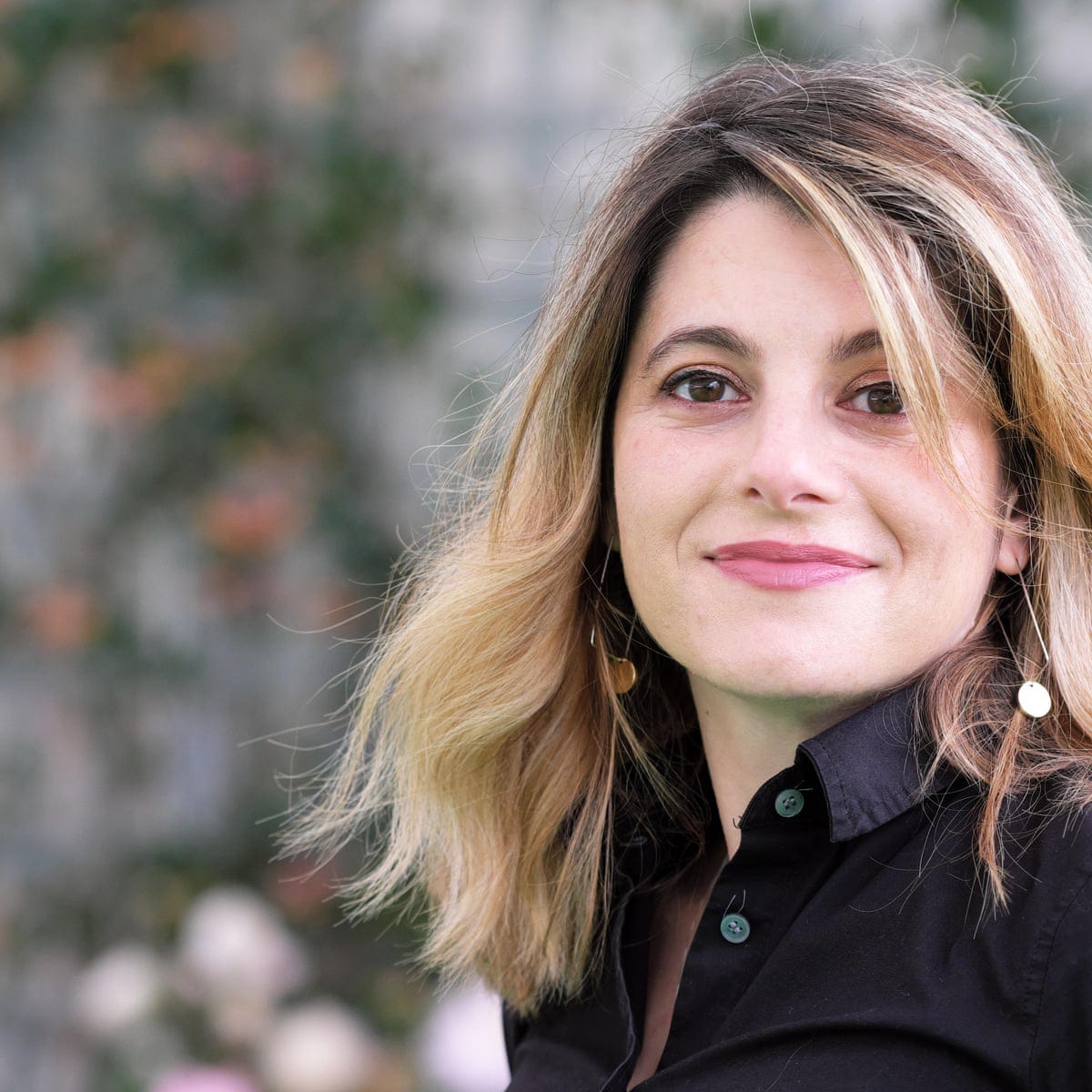
Hallie Rubenhold is the host of Bad Women: The Ripper Retold. Follow her on Twitter here.
Why are people so obsessed with Jack the Ripper?
The murders committed by Jack the Ripper were (and still are) unsolved. At the time of the killings, the police simply didn’t have the ability or the manpower to contend with a serial killer and so it felt to them, and to the press, who were watching with keen interest, that the murderer seemed to possess some sort of genius, even some sort of supernatural power. This legend – that the Ripper was ‘great’ in some way, seems to have stuck. He’s transitioned from being a real person who killed real people into a type of fictional monster, like Dracula or Mr Hyde.
What did you learn about yourself making the show?
That podcasting is a completely different beast to making TV or writing books – the two things with which I’m most familiar. I had to learn on my feet – and I’m still learning!
Fill in the blank: you will like Bad Women if you like ______
You will like Bad Women if you like The Five but also if you like True Crime, history, or exploring issues that impact women today. In the series we really do a deep dive into all of these things, and for those people who’ve read the book, the show riffs on many ideas and subjects introduced in The Five and expands the discussion much further.
What’s a big thing people get wrong about Jack the Ripper?
Ha ha! Pretty much everything! The number one take away should be – Jack the Ripper was not a killer of ‘prostitutes’ – only 2 of the 5 women murdered have documented links to the sex trade. Instead, the Ripper was a killer of marginalized women; women living in poverty, homeless women, women in the sex trade, addicts, victims of domestic violence – the very same people who are still murdered today and whose deaths go ignored.
What did it do to your mind/psyche dealing with all this dark stuff when you were making Bad Women?
When I was writing and researching The Five, I had to go to a very dark place. It was extremely intense and I had to take a lot of breaks from it. Doing the podcast has been a continuation of that experience, but by now I’m accustomed to dealing with such emotionally difficult material. One of the outcomes of working with this story is that it made me much more aware of homeless women and their plight. I try to stop and speak to homeless women now when I see them, to acknowledge them and what they are experiencing and to offer help, if possible. I also support two UK charities - Shelter and Beyond the Streets.
Why is it called Bad Women?
“Bad Women” is an ironic title. Historically, any woman who did not live in the proscribed way and fulfil her ‘duty’ to become a good daughter, wife and mother was considered a ‘bad woman’. She’d failed at the one thing that was expected of her. History is filled with ‘bad women’, and theirs are the most interesting stories.
Did you look to any podcasters as inspiration when you were making the show?
I love Serial and Sarah Koening. I love her style of presenting, her voice, her insights. She’s one of my podcast heroines.
🚨If u only have time for 1 thing🚨
Avery Trufleman is returning to our beloved Nice Try! with a series on the interior. The first season of Nice Try! focused on utopian places. This time Avery is asking: can a private home be some sort of utopia? Or is it just making private spheres more protected and the public sphere more public? The first episode was a fun and thorough exploration of the doorbell—who knew doorbells were so interesting? From how their evolution has reflected society to the future and danger of what video surveillance in doorbells will bring, this episode is the perfect start to the series—a threshold between the worlds of utopia and private, interior spaces.
FAKE AD
This newsletter is supported by Casper! Casper is a friendly lil ghost who will spook you whenever you want. Download our Caper app and set up scheduled spooks, or have Casper spook you randomly. His spooks are adorable! Casper comes to you collapsed in a tiny refrigerated box—easy peasy! Order now using code “podcastthenewsletter” for a 10% discount.
hey.
✨Sign up for my Podcast Marketing Magic newsletter!
✨I was accepted to speak at SXSW. Thanks to all of you who upvoted me!
✨Last Tuesday, I attended a live taping of Podcast But Outside with Arielle Nissenblatt, and I cannot think of anything more on-brand than that. I’m so happy live events are back!
✨Arielle recommended the show Real Estate, Real Laughs in her podcast and newsletter.
💎BTW💎
🎙️Princess of South Beach is a 36-part modern audio telenovela series told in English and Spanish (same feed, different episodes) that tells the story of twin sisters María del Carmen and Gloria Calderón, who are separated at birth. María ends up living as an orphan in a convent, while Gloria is a rich socialite living in Miami Beach. When Gloria dies in a horrible accident, María claims her identity and no one is the wiser. This podcast feels like a woke version of an Elin Hilderbrand book (or if you are familiar with telenovelas, a telenovela) and I mean that in the best way. The story is absolutely addictive and fun, it’s silly yet is able to gracefully touch upon on current socio-cultural issues. (Including a very funny gossip TV show called “Tea with Tatiana.”) Never have I ever in my life so far been so unable to stop listening to a show. Each episode ends on an exciting plot twist and they’re so short so the commitment for “just one more” is low. There are only 7 available, go binge them all now before you get too far behind.
🎙️Way Too Interested is a new show that interviews interesting people about the stuff they’re obsessed with, along with an expert of those things. Episode one featured Roy Wood Jr. nerding out about puzzles, but it was the Felicia Day episode that got me. First, Felicia talks about creativity and how that changed when she became a mom. She talks about wanting to tell her kid Bible stories (because they are cool) without the spiritual slant, kind of like how we tell the stories of Greek Mythology. But she couldn’t find them. How about that! The best stories ever told presented in one way. Felicia’s curiosity about this topic had me cha-chinging around my apartment, if that makes any sense. Dr. Malka Simkovich joined the show to give so much historical background on some of our most timeless Bible stories, and Jesus, “who Felicia correctly calls a “cool dude.” This episode is a history of Christianity and why some stories about Jesus stuck. I will be passing this episode along to anyone who is like, “Why is Lauren so obsessed with Jesus?” It’s all right here. I’m begging you to listen.
🎙️Fallen Angel made what consider a quiet debut into the podcast space—I haven’t heard anyone talking about it and it seems like a big deal. It brings together the hosting talents of Justine Harman (Broken Harts and O.C. Swingers) and Vanessa Grigoriadis (Chameleon: The Hollywood Con Queen, and Tabloid: The Making of Ivanka Trump.) It’s telling the story of Victoria’s Secret, from its humble beginnings, to when nobody was interested in selling feminine underwear, to the company’s rise to power. As someone who grew up buying Victoria’s Secret in the 90s, I can begin to understand what these panties did to our culture, and how why today the brand struggles to be relevant. The first two episodes offer the brand’s history, ex-CEO Les Wexner’s ties to Jeffrey Epstein, and the story of the cult-like Victoria’s Secret Angels, and the messages they were sending to women by being thin, large-breasted models who seemed almost like alien robots. Fallen Angels is telling a culture story that most of us are probably part of in some way. (Even if you were just a boy in the ‘90s intrigued by the models.)
🎙️Things are getting juicy over at Once Upon a Time…at Bennington College. I was excited about this show because it is giving the unknown history of Bret Easton Ellis, Donna Tartt, and Jonathan Lethem, and their time together at Bennington College in 1986. The format is interesting—the first episodes focused on Bret, then we get introduced to Donna, and audio with Jonathan is woven throughout. Donna’s episode Mississippi Chippy is about Donna’s unique approach to dating and sex, and the way she adopted a lifestyle that was common at the school—that of a gay man. It is this episode that has cause her to threaten to sue the podcast. She isn’t suing yet, but is warning Once Upon a Time to make sure they double check their facts. It’s tricky—so many podcasts have been called out for telling stories that they shouldn’t be telling and it’s a real problem. I wouldn’t want a podcast about my own life. But as a fan of literary dramas, I find this show too appealing to boycott. (Tartt did not want to be involved int he making of the podcast, but the show is very revealing and doesn’t hide a thing about her.)
🎙️The first story in the latest episode of Radio Rental gave me chills. A woman is visited at night by a spirit that ends up making the news in real life the next day. If you haven’t listened to Radio Rental yet, try this episode. It’s a great example of the best of what Radio Rental can do. The second story in this episode is about a truck driver who narrowly escapes being murdered. It didn’t scare my mom—she doesn’t believe it happened. I don’t care if any of these stories happened. They all force you to make your own judgment about what is real and what is imagined.
🎙️Marketplace’s This Is Uncomfortable is one of my favorite shows, which surprised me because usually when I think about money I want to crawl under my couch and die. It’s a money storytelling show with emphasis on storytelling, introducing us to the people and complicated issues behind the money. (One of my favorite episodes is Why Don’t You Fix Your Teeth?, which is about how poor dental care impacts people’s ability to find work.) They are back with a new season, and the first episode interviews a woman who inherited a large amount of money from her family but wanted to give it all away, and her father, who wanted her to spend it on herself. She didn’t make the money, but it was technically hers. This episode offers an open father/daughter conversation about two people who don’t see eye-to-eye about wealth, and how they can find common ground. The money is secondary. This is about their relationship.
🎙️I know Mike Schubert from a podcast that I adore, Meddling Adults, and he is back as host of Modern Muckraker, a brand new comedic investigative journalism podcast about pop culture questions nobody thinks to ask. He will tirelessly pursue the truth of mysteries from films, music, books, and more. I love it when people commit to silly things, and this is definitely that. Episode one had my heart from the start—it’s a scientific look into whether Spider-Man would have saved time taking the subway rather than swinging off buildings. It sounds funny, but Schubert and his team did the math, calculating the physics of a swing, the height of skyscrapers, and even how Spider-Man would fare swinging off light posts in Central Park. In the end, the come up with options for Spidey, comparing his ability to swing vs. the speed of every train. I was both laughing the whole way but so tuned in and fascinated.
🎙️Throughline’s Nostalgia Bone begins with the history of nostalgia (it was originally considered a deadly, contagious disease!) and goes all the way up to our current relationship with it (relying on it heavily post pandemic, when people are grappling with the insecure and unknown) and the future. Nostalgia can be a helpful balm, but there are hidden dangers that surface when we are stuck in the past. We are living in an age uniquely and constantly being hit with nostalgia waves, the worry is that this thwarts us from being future-thinkers. Trump wanted to Make America Great Again, and Biden has promised to Build Back Better. In a time when climate change is a relatively new, rapidly increasing problem, going into our comfort zones might end up causing irreversible problems.
🎙️Chelsey Weber-Smith (American Hysteria) was a guest on You Are Good to talk about The Rocky Horror Picture Show, which led to a conversation that made me want to go rewatch the movie ASAP. Together they explain how Rocky Horror flips the idea of feeling normal on its head—in the film, Janet and Brad’s normalcy is what’s seen as the bizarre to the people in the movie. Listening made me surprised that in 1975 filmmakers were able to create such nuanced art around transgender identity.
🎙️The Alarmist, the show that seeks to determine who’s to blame for certain cultural events, has an episode about The Shining, which considers not just the obvious culprits of the disasters that is The Shining, but the dangers of writing retreats and lack-of-routine. It’s a unique look at the story, and brought up interesting themes about abuse, slavery, Native American genocide, and white privilege, all things that The Overlook hotel represents if you think about it hard enough. It inspired me to watch the film Room 237 last night, and my mind was blown. I’d start to tell you about it but I don’t want to sound like a conspiracy theorist. Just watch it.
🎙️The satire site The Babylon Bee is the right’s version of The Onion. On The Experiment, The Atlantic’s Emma Green talked to editor in chief Kyle Mann about the publication’s joke-telling strategy. It’s wonderful to hear Emma read the jokes to Kyle and have him try to explain the to her. (It’s like, no we technically get it. But we don’t get it, get it.) Generally, the left doesn’t think it’s funny and many people from both sides are mistakingly taking the satire as fact. Emma confronts Kyle about where he draws the line between making a joke and doing harm, and Kyle responds by making some bold assertions about what would have made Jesus laugh. (Apparently Jesus would have loved gay jokes—he was a real disruptor!) Drink every time Mann says “marxist mindset,” “you don’t understand satire,” “I can’t explain it to you,” or “this is the point I’m trying to make about comedy.”
🎙️Suchandrika Chakrabarti has a new podcast But Is It Funny?, an honest critique of comedy in the UK and US. I would love Suchandrika by herself (she is lovely and has introduced me to so many great UK shows. The Beef and Dairy Network!) but she is joined by writer/improviser Jamal Khadar and The Guardian UK’s chief comedy critic Brian Logan to make up a solid team of people who understand the comedy scene and aren’t just three people bullshitting in their mother’s basement. They’re into the nuance and representation in satire, fandom, and The Chair. We all listen to comedy but we don’t dedicate ourselves to talking about it, and talking about it is half the fun. Isn’t it the reason we talk about it in the first place? Even when, and maybe especially when, it’s something we don’t like? Their latest episode unpacks, no surprise here, the Chappelle special.
🎙️Remember when Donald Trump called African nations shithole countries when talking about immigration in 2018? It shocked all of us (or did it?) but it hit Afia Kaakyire (that’s a pseudonym) harder. In S***hole Country, an audio memoir from an anonymous producer, explores what it means to achieve the Ghanaian-American dream. S***hole Country lets Afia open up about her family’s history and vulnerabilities with such honesty the show has to be anonymous, letting us try to understand what it feels like to have your home so misunderstood, and what it looks like to be first-gen. It sounds grave but it as funny as it is smart. Afia is our friend and guide, here. She’s not just a storyteller. It’s all part of Radiotopia Presents, a podcast feed and home for artist-owned limited series from independent creators.
🎙️Back Issue’s Tracy Clayton and Josh Gwynn ended their season with a great episode about bodies, talking to Nikki Giovanni, Nichole Perkins, and Savala Nolan about how Black women and men were urged to fit inside a box that reflected white ideals, and the damaging effects that causes. With Nichole, they speak of “fast girls,” something we call young girls who are blamed for their developing bodies, and what that attention does when it’s not something that’s desired or able to be helped. This is a unique space where three very different Black women open up about their physical bodies and there is a through line of racism and discrimination so perfectly addressed. This episode was a perfect way to go out of the second season—I’m not sure how they could have topped it.
🎙️The Plot Thickens launched a new season about Lucille Ball, and if you’re a fan of the original sitcom or have been enjoying Lucy’s own podcast Let’s Talk to Lucy, you’re probably eager to hear her backstory. Episode one takes us to Jamestown, New York, to the story of Lucy’s childhood, which I had never heard. It’s a rockier story than you may imagine. Lucy’s father died and her mother remarried and when she asked her father’s husband if he was her new dad, he said, ‘you can call me Ed.’ Hearing about how people get funny is often rooted in hard things, and Lucy is no exception. This is the story that fleshes out all we know and love about Lucy. It’s fully of audio, interviews, and stories we’ve never heard before.
🎙️You may think you’re sick of Squid Game content, but hang with me…Spectacular Vernacular had an episode about the language of the show that was unlike anything I heard. Nicole Holliday and Ben Zimmer talk about what gets lost in translation on the show, why so many Korean-speakers take issue with the captions, and why the characters keep saying “Opa!” This was one of the only conversations I heard that made me a smarter Squid Game consumer, the nerdiness level of what you hear is top notch. PS The Watch has also been putting out very good review content of the show.
🎙️Suspect continues to be one of the best true crime stories I’ve heard. It starts with a Clue-like murder mystery (who killed Arpana Jinag at her Halloween party?) and moves into a story about wrongful conviction. This show is full of surprising twists and turns (Macklemore made an appearance in the last free episode) and as the story develops, we see exactly how the wrong man was put behind bars. (And the answer is…racism.) Jurors didn’t identify with Emmanuel, the man they found guilty. But of course a bunch of white people aren’t going to see Emmanuel’s story as it is. We didn’t believe Amanda Knox because she didn’t act like we expected her to. We misdiagnose women with autism because their symptoms don’t match up with what we want to see. And if Emmanual acted cagey about the cops, it may have been because Black people have a different relationship with them. This story is driving me nuts in the best way.
🎙️City of Ghosts is a supernatural neo-noir that stars El Rivkin, a queer woman who makes a living exposing the dirty secrets of New York’s elite with her business partner Prizrak. They find themselves in deep when they are asked to investigate a journalist’s murder, and their adventure finds El dealing with ghosts of all kinds—are they really figments of her imagination or are they a reflection of her mental health? This is a twisted, fun mind-fuck that brings 1990s NYC to life with acute sound. The cover artwork is my favorite. (Sorry to be the bearer of bad news, but podcast listeners do judge books by their covers.)
🎙️Carlye Wisel’s latest episode of Very Amusing covers the special events going down in Walt Disney World’s 50th anniversary party. (If this interests you, check out my Harklist that celebrates 50 years of magic.) I can think of at least two people (me and Shreya Sharma) who would love the end of this episode, where Carlye explains why adult Disney fans are better than everyone else. I needed to hear this. I clipped it for you (Shreya) here.
🎙️If you listened to me and downloaded Maintenance Phase’s part-one exploration of Rachel Hollis, you should know that they released part two, and it is pure schadenfreude. Chef’s kiss.
🎙️I misgendered Lill in the episode of Bodies Do Less Harm, and I’m embarrassed and sorry. (Lill is nonbinary and identifies as they.) I have been thinking of this episode all week, so here’s my chance to correct my mistake and tell you that if you didn’t listen to it last week, listen to it now. It’s amazing.
🎙️I love you!